
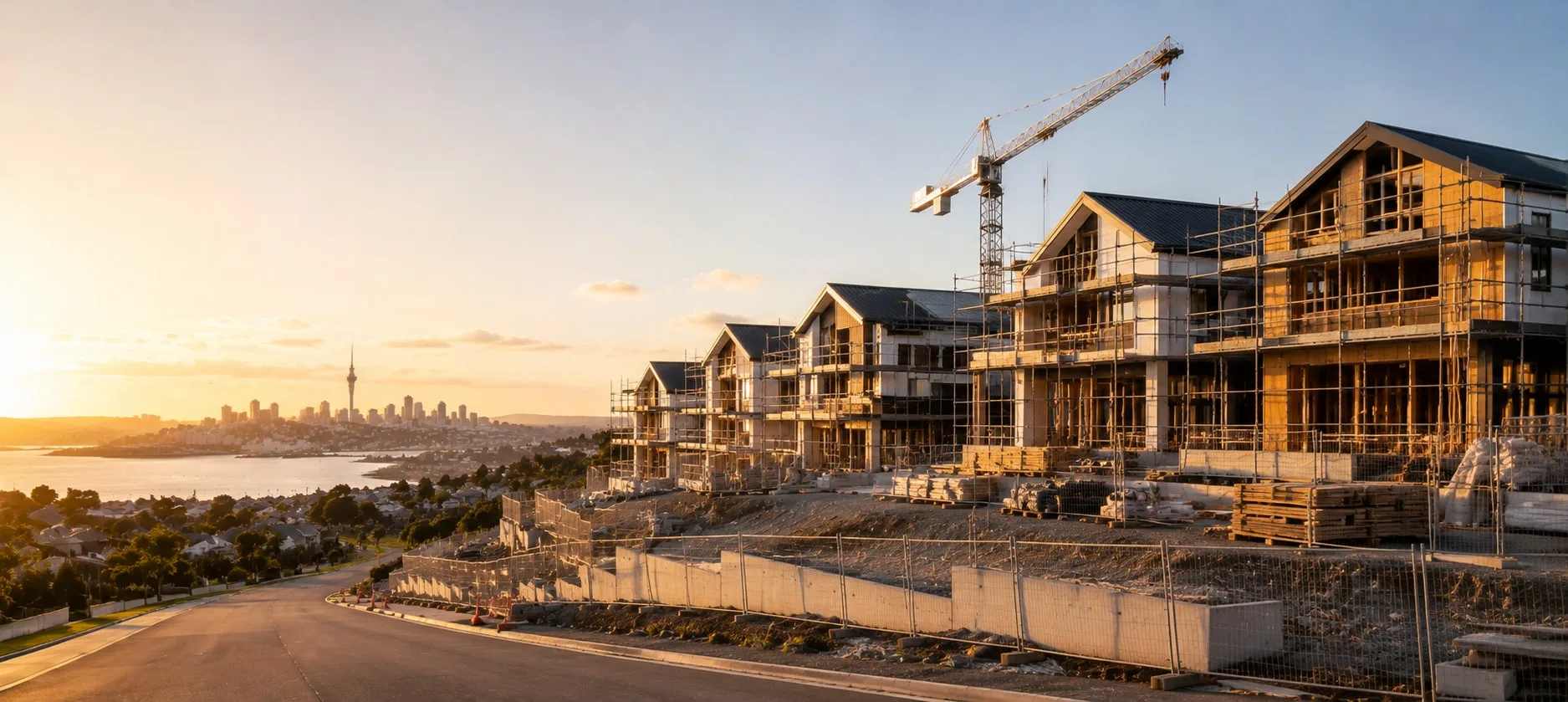
Build-to-rent in New Zealand: what it is, and what it means for private landlords
Build-to-rent is purpose-built rental housing held long term by a single owner — now a recognised tenancy type in New Zealand law, and it’s changing what tenants expect from every landlord.
It has its own tenancy type
The Residential Tenancies Act now recognises a build-to-rent tenancy as a distinct category, with its own rules and its own approved termination notice form. The defining feature is a right to a longer tenancy term. A build-to-rent development must offer tenants the option of a fixed term of at least ten years, with the tenant able to end it on shorter notice. Security of tenure is the product. Tenancy Services publishes guidance on build-to-rent tenancies and the notice form for ending one.
Why it exists
Institutional capital wants predictable long-run income rather than capital gain on individual units. Tenants want stability. Build-to-rent aligns those two things in a way the traditional model of many small private landlords does not. The developments are professionally managed, consistently maintained, and designed around renting rather than adapted from a for-sale product — amenity, communal space, and management on site.
What it changes for private landlords
Build-to-rent will not replace private landlords. New Zealand's rental stock is overwhelmingly individually owned and will remain so. What it does is reset tenant expectations, and those expectations then apply to everyone.
- Security of tenure becomes a competitive factor. Where a tenant can choose a ten-year term elsewhere, a landlord offering rolling twelve-month uncertainty is offering a worse product. Longer fixed terms, or a clearly communicated intention to keep a good tenant, become worth something.
- Professional standards become the baseline. Documented maintenance response, proper notice, photographic inspections, evidenced Healthy Homes compliance. Tenants who have experienced managed accommodation notice when they don't get it.
- Quality expectations rise. Warm, dry, well-ventilated, properly heated. A property scraping the Healthy Homes minimum competes badly against purpose-built stock.
- Turnover becomes more expensive. As the alternative improves, the cost of losing a good tenant rises.
The practical response
None of this requires competing with an institution on amenity. It requires being good at the things a private landlord can actually be good at.
- Offer a longer fixed term to a proven tenant who wants one. It costs nothing and materially reduces your vacancy risk.
- Be genuinely responsive on maintenance. This is the single largest driver of tenant retention and it is fully within your control.
- Exceed Healthy Homes rather than scraping it. A comfortably compliant property costs less to run for the tenant and lets faster for you.
- Communicate properly. Correct notice, clear reasons, no surprises.
- Review rent predictably. Modest annual increases tracking market are accepted; large corrective jumps prompt moves.
What to watch
Build-to-rent supply in New Zealand is concentrated in Auckland and Wellington and in apartment typologies. Its direct competitive effect is strongest on inner-city one and two-bedroom rentals, and weakest on family housing in suburban areas. If you own an inner-city apartment, this matters to you sooner. If you own a three-bedroom house in an outer suburb, it matters mainly as a signal about where tenant expectations are heading.
Frequently asked questions
What is build-to-rent in New Zealand?
Purpose-built rental housing held long term by a single owner and professionally managed, rather than sold off individually. It is recognised as a distinct tenancy type under the Residential Tenancies Act.
How long are build-to-rent tenancies in New Zealand?
A build-to-rent development must offer tenants the option of a fixed term of at least ten years, with the tenant able to end it on shorter notice.
Does build-to-rent affect private landlords in New Zealand?
It resets tenant expectations around security of tenure, professional management and property quality, which then apply across the rental market.
Where is build-to-rent concentrated in New Zealand?
Predominantly in Auckland and Wellington, and in apartment typologies, so its direct competitive effect is strongest on inner-city one and two-bedroom rentals.
Can a small landlord compete with build-to-rent?
Yes, on responsiveness, property quality, longer fixed terms for proven tenants, and predictable rent reviews — none of which require institutional scale.